|
The history of kungfu has often been shrouded in secrecy and coloured with vivid recollections, and myths. Hence, the reader is forewarned that this article may contain some factual errors or half-truths that can be difficult to authenticate. Note also that there could be variations within each different style, and this may be attributed to factors such as a different lineage. - Benjamin Loh
|
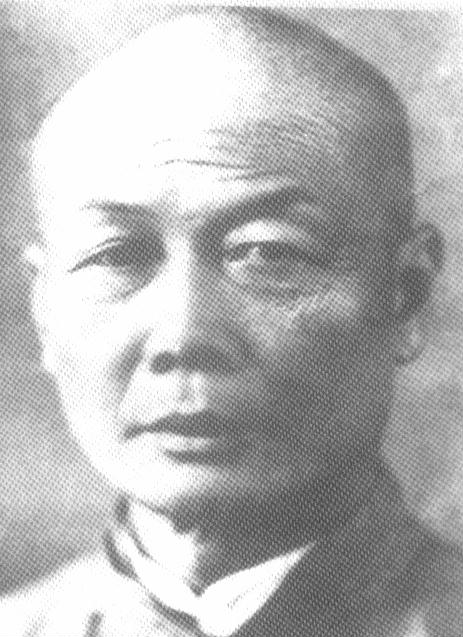 Grandmaster Tam Sam - Choyleefut (buksing division)
|
|
Shaolin temple
According to some sources, the first Shaolin temple was built by Emperor Wen Di somewhere between 495 to 497 AD. This temple was situated in Songshan (Mount Song). Henan Province. In 539 AD, Bodhidharma left India to come to China and spread Buddhism. There has been some speculation that Bodhidharma had learnt yoga and kalari payat, a type of martial art, while in India. Upon arrival at the temple, he was surprised to see that the monks could not keep up with the meditation exercises because they were easily tired or could not concentrate. He taught them some exercises that later became known as Eighteen Arhat / Lohan Hands. Bodhidharma was also credited with developing a set of exercises known as Sinew Changing (yijinjing) and Marrow Washing (xisuijing).
|
|
Specialisations within Shaolin temple
In the Shaolin temple, some were martial monks (wuseng). Over time, each chamber of the temple became known for a particular skills such as iron palm. It was common for monks to stay up to ten years before leaving the temple to travel and seek out other teachers.
Five elders
During the Qing Dynasty, the Shaolin temple at Henan was burned in the 1700s. Many of the monks fled south to places such as the Shaolin temple in Fujian Province. Of these, five became known as the five elders: Wumei (Ng Mui), Miao Xing (Miu Hing), Feng Daode (Fung To Tak), Zhishan (Jee Sin) and Bai Mei (Bakmei). Feng Daode was well-versed in iron palm while Zhi Shan was skilled in the Northern Shaolin style. Wu Mei, a nun, was said to have developed the Plum Blossom (meihua) style of kungfu later. Feng Daode and Bai Mei went on to Mount Emei, Sichuan Province. Through the years, Baihupai (bakfupai, white tiger) and Baimei (Bakmei) styles would develop respectively. It is not clear what style Miao Xing transmitted because some say that he created a dragon palm style while others say that he passed on the Five Form (ngyingkuen) style to Fong SaiYuk.
|
 'Hard' (gang) vs. 'soft' (rou)
During the Song Dynasty, Jue Yuan (Kwok Yuen) left the Shaolin temple after several years of training. He found that what was being taught there emphasized external strength. He later traveled to learn other styles and met Bai Yufeng and Li Sou. After exchanging knowledge, they returned to the temple and developed an internal/external style called Five Form (wuxing/ ngying). The five forms referred to dragon, tiger, crane, snake and leopard styles. The combination of 'soft' and 'hard' was helpful in helping the Shaolin monks further refine their self-defence skills. |